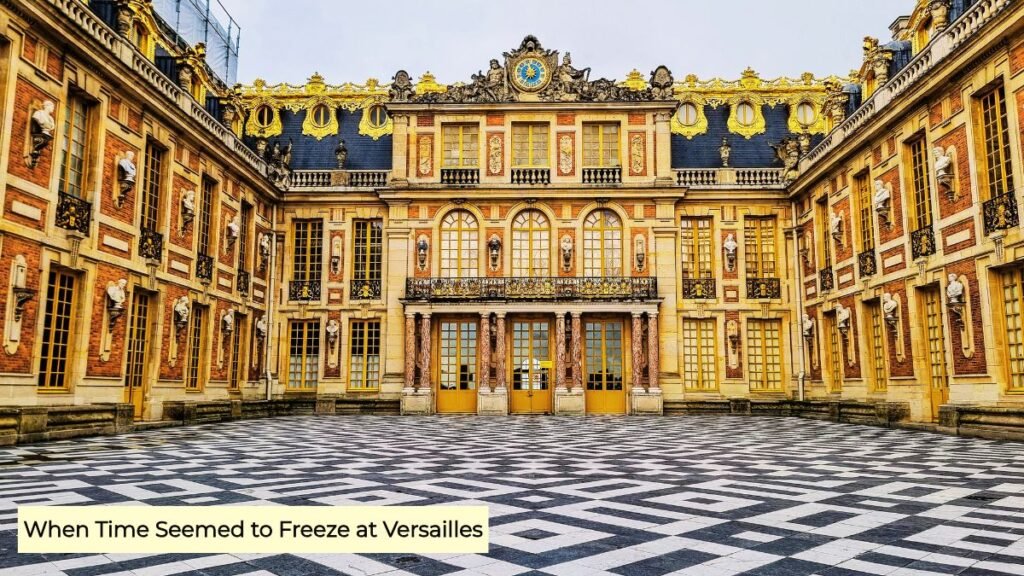
What Was the Moberly–Jourdain Incident?
What if a simple walk could take you back in time to the 1700s? In August 1901, two English academics visiting Versailles — Charlotte Anne Moberly and Eleanor Jourdain — thought they were simply exploring the gardens. But the world around them suddenly seemed to change: the air grew heavy, the sunlight dulled, and people appeared wearing 18th-century clothing, as if they had stepped straight into the 1700s. What began as a normal afternoon quickly became a disorienting and unsettling experience. This strange event would later become known as the Moberly–Jourdain Incident, one of history’s most famous alleged time-slip mysteries.
A Walk Through Versailles That Felt Wrong
The incident took place near the Petit Trianon. As the women wandered the grounds:
- Sounds were muted, and the atmosphere felt oppressive
- Figures appeared in outdated clothing, including cloaks, tricorn hats, and 18th-century dresses
- One man’s face seemed distorted and unsettling
- Moberly believed she saw a woman sketching — possibly Marie Antoinette
Then, just as abruptly as it began, the strange sensations lifted. Modern tourists and the familiar gardens returned, leaving the women bewildered.
Investigating the Mystery
Initially, neither woman interpreted the event as paranormal. Only after comparing notes did they realize how many experiences they had shared. They began researching historical maps, clothing styles, and garden layouts, concluding that many details they observed matched Versailles as it appeared in the late 1700s — over a century earlier.
In 1911, they published An Adventure, an anonymous account that immediately sparked debate and curiosity.
Time Slip, Haunting, or Shared Imagination?
Explanations for the Moberly–Jourdain Incident fall into three main categories:
- Time Slip Theory: Some believe the women temporarily glimpsed the past, an unusual phenomenon known as a time slip.
- Residual Haunting: Others suggest the palace replayed a moment from history like a ghostly recording.
- Psychological Factors: Skeptics point to suggestion, memory distortion, or shared fantasy as a plausible explanation.
Despite debate, no single theory fully explains the incident, which continues to fascinate historians, paranormal enthusiasts, and the curious alike.
For those who enjoy ghostly mysteries, my Haunted Hearts boxset explores similar supernatural tales.
Why the Incident Still Captivates
The case endures because the women were rational, serious academics — not thrill-seekers or storytellers. Their cautious approach lends credibility and intrigue. Even today, visitors to Versailles report moments of unease: sudden silences, eerie sensations, or a feeling that the past is very close. The Moberly–Jourdain Incident reminds us that history may be closer than we think — sometimes, close enough to touch.
A Glitch in Time — Or Just Perception?
Whether a true time slip, a haunting, or a psychological event, the Moberly–Jourdain Incident raises haunting questions:
- Can time fold on itself?
- Can shared perception create a temporary glimpse of another era?
- Are some moments so intense they linger across centuries?
No matter the explanation, the story remains a captivating blend of history, mystery, and the unknown — perfect for anyone drawn to historical mysteries and unexplained phenomena.
If you loved the blogpost, pin this image to your board